
The Norton Field Guide to Writing (6th Edition): A Comprehensive Plan
As of April 1st, 2026, accessing the 6th edition’s PDF requires careful consideration; legitimate sources offer secure downloads, while unauthorized ones pose risks.
The 6th edition of The Norton Field Guide to Writing represents a significant update to a widely-used resource for college students and writers. Released with a focus on contemporary writing challenges, this edition builds upon the strengths of previous versions while incorporating crucial changes reflecting the evolving landscape of digital communication and research.
Specifically, the guide addresses the increasing demand for accessible PDF versions, acknowledging students often seek convenient digital access. However, it’s vital to approach PDF downloads cautiously. While legitimate sources exist, the internet also hosts unauthorized copies that may contain malware or be incomplete. This introduction emphasizes the importance of responsible access and highlights the guide’s commitment to supporting writers in a dynamic environment, as of April 1st, 2026.
What is the Norton Field Guide to Writing?
The Norton Field Guide to Writing is a comprehensive handbook designed to assist students across all disciplines with the complexities of the writing process. It’s more than just a grammar guide; it’s a resource covering rhetoric, research, documentation, and various writing genres. The 6th edition, available in both print and increasingly sought-after PDF formats, aims to empower writers at every stage, from brainstorming to final revision.
The PDF version offers portability and accessibility, but users should be aware of potential risks associated with unauthorized downloads as of April 1st, 2026. The guide’s strength lies in its practical advice, abundant examples, and focus on critical thinking, making it a valuable tool for navigating academic and professional writing demands.
Target Audience and Skill Levels
The Norton Field Guide to Writing caters to a broad audience, primarily undergraduate students in composition courses, but also proves beneficial for writers across all academic disciplines and skill levels. Whether a student is a novice writer grappling with basic essay structure or a more experienced researcher tackling complex arguments, the guide offers relevant support.

The 6th edition, including the PDF version accessible as of April 1st, 2026, is designed to be adaptable. It provides foundational instruction alongside advanced techniques. The guide’s modular structure allows instructors to tailor assignments, and students to focus on areas needing improvement, making it a versatile resource for diverse learning needs.

Key Features and Updates in the 6th Edition
Updated April 1st, 2026, the PDF boasts revised rhetorical strategies, expanded digital writing coverage, and fresh sample essays for enhanced learning.
Revised Rhetorical Approaches
As of today, April 1st, 2026, the 6th edition’s PDF reflects a significant shift in rhetorical instruction. It moves beyond traditional methods, emphasizing adaptable strategies for diverse writing situations. The updated content within the PDF focuses on audience awareness, purpose clarification, and contextual understanding.
Students utilizing the PDF will encounter expanded sections on rhetorical modes – narration, description, process analysis, definition, and argumentation – presented not as rigid formulas, but as flexible tools. The guide encourages critical thinking about rhetorical choices, prompting writers to analyze how different approaches impact their audience. Furthermore, the PDF integrates contemporary rhetorical concepts, like visual rhetoric and digital storytelling, preparing students for the evolving landscape of communication. This revised approach aims to foster rhetorical flexibility and empower students to become effective communicators in any context.
Expanded Coverage of Digital Writing
As of April 1st, 2026, the 6th edition PDF demonstrates a substantial expansion in its coverage of digital writing practices. Recognizing the dominance of online communication, the guide dedicates significant space to navigating digital platforms and composing for various digital genres;
The PDF includes detailed guidance on creating effective websites, social media content, and multimedia presentations. It addresses issues of online credibility, digital citizenship, and responsible online behavior. Students accessing the PDF will find practical advice on adapting writing styles for different digital audiences and mastering the nuances of online communication. Furthermore, the guide explores emerging digital tools and technologies, preparing students for the future of writing. This expanded coverage ensures students are well-equipped to thrive in the digital age.
New Sample Essays and Readings
As of April 1st, 2026, the 6th edition PDF boasts a refreshed collection of sample essays and readings, designed to inspire and instruct students. These selections represent diverse voices, perspectives, and writing styles, offering models for various rhetorical situations.
The PDF features essays addressing contemporary issues, reflecting the evolving cultural landscape. These new readings are carefully curated to complement the guide’s instructional content, providing students with authentic examples of effective writing. Accessing the PDF allows students to analyze these models, deconstructing their strategies and applying them to their own work. The inclusion of diverse genres—from personal narratives to argumentative pieces—broadens students’ understanding of rhetorical possibilities and enhances their critical thinking skills.

Core Chapters and Content Overview
As of April 1st, 2026, the PDF comprehensively covers the writing process, thesis development, research, and source analysis, offering essential guidance for students.
Understanding the Writing Process
As of April 1st, 2026, the Norton Field Guide to Writing (6th Edition) PDF meticulously breaks down the writing process into manageable stages. It emphasizes prewriting techniques like brainstorming and outlining, crucial for establishing a clear direction. The guide details drafting strategies, focusing on generating ideas and developing a coherent structure.
Revision is presented not as error correction, but as a transformative process of refining arguments and enhancing clarity. The PDF highlights the importance of seeking feedback from peers and instructors, fostering a collaborative learning environment. It also addresses common roadblocks writers face, offering practical solutions for overcoming writer’s block and maintaining momentum.
Furthermore, the guide stresses iterative writing – the cyclical nature of drafting, revising, and editing – as key to producing polished, effective work. This section of the PDF provides a robust framework for approaching any writing task with confidence.
Developing a Strong Thesis Statement
As of April 1st, 2026, the Norton Field Guide to Writing (6th Edition) PDF dedicates significant attention to crafting compelling thesis statements. It clarifies that a thesis isn’t merely a topic, but a focused argument requiring proof. The PDF illustrates how to move from broad subjects to specific, debatable claims.
It provides numerous examples of weak and strong theses, dissecting why certain statements are more effective than others. The guide emphasizes the importance of a thesis being arguable – capable of generating discussion and differing viewpoints. It also stresses the need for a thesis to provide a roadmap for the essay, outlining the main points that will be explored.
The PDF offers practical exercises to help writers refine their thesis statements, ensuring they are clear, concise, and appropriately scoped for the assignment. This section is invaluable for building a solid foundation for any analytical or argumentative essay.
Effective Research Strategies
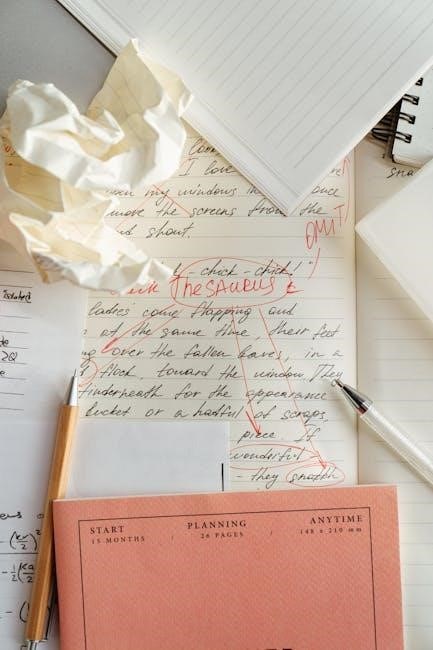
As of April 1st, 2026, the Norton Field Guide to Writing (6th Edition) PDF comprehensively covers research methodologies. It moves beyond simple source-finding, detailing how to formulate effective search terms and utilize library databases efficiently. The PDF emphasizes evaluating source credibility – a crucial skill in the digital age – offering checklists and criteria for assessing websites, journals, and other materials.
It guides students through the process of note-taking, advocating for methods that go beyond mere copying, such as paraphrasing and summarizing. The guide stresses the importance of keeping meticulous records of sources to avoid plagiarism.
Furthermore, the PDF illustrates how to narrow a research topic, develop research questions, and create a research plan, ensuring a focused and productive investigation. It’s a vital resource for students at all levels.
Analyzing and Synthesizing Sources
As of April 1st, 2026, the Norton Field Guide to Writing (6th Edition) PDF provides robust guidance on moving beyond simply summarizing sources. It details techniques for critically analyzing arguments, identifying biases, and evaluating the evidence presented. The PDF emphasizes discerning the relationships between different sources – points of agreement, disagreement, and nuance.
Students learn how to synthesize information, creating a cohesive argument that draws upon multiple perspectives. The guide offers practical strategies for identifying patterns, themes, and contradictions across sources.
It also illustrates how to integrate source material effectively, using quotations, paraphrases, and summaries to support your own claims, all while maintaining academic integrity.

Grammar and Mechanics Section
As of April 1st, 2026, the 6th edition PDF offers a detailed review of grammar essentials, punctuation, and style, aiding clarity and precision.
Grammar Essentials Revisited
As of April 1st, 2026, the 6th edition PDF comprehensively revisits fundamental grammar principles, offering students a robust foundation for effective writing. It meticulously covers parts of speech, sentence structure, and common grammatical errors, providing clear explanations and practical exercises.
The guide emphasizes understanding why grammatical rules exist, not just memorizing them, fostering a deeper comprehension of language mechanics. It addresses frequently confused concepts like subject-verb agreement, pronoun usage, and modifier placement;
Furthermore, the PDF version includes diagnostic quizzes to help students identify their weaknesses and targeted practice to improve their skills. This section is designed to build confidence and ensure grammatical accuracy in all writing endeavors, ultimately enhancing clarity and credibility.
Punctuation Rules and Common Errors
As of April 1st, 2026, the Norton Field Guide’s 6th edition PDF delivers a detailed exploration of punctuation, addressing common errors that hinder clear communication. It systematically covers commas, semicolons, colons, apostrophes, and quotation marks, providing illustrative examples and practical application exercises.
The guide doesn’t merely present rules; it explains the reasoning behind them, helping students understand how punctuation contributes to sentence meaning and flow. It specifically tackles frequently misused punctuation, such as comma splices and run-on sentences.
The PDF format allows for interactive learning, with self-check quizzes and detailed answer keys. Mastering punctuation, as outlined in this section, is crucial for producing polished, professional writing and avoiding misinterpretations.
Style and Sentence Variety
As of April 1st, 2026, the Norton Field Guide to Writing’s 6th edition PDF emphasizes stylistic nuance and sentence construction, moving beyond grammatical correctness. It advocates for clarity, conciseness, and engaging prose, offering techniques to avoid wordiness and passive voice.
The guide demonstrates how varying sentence length and structure—using simple, compound, complex, and compound-complex sentences—enhances readability and maintains reader interest. It provides exercises to practice combining sentences and rewriting passages for improved flow.
The PDF version includes examples of strong stylistic choices across different genres, illustrating how effective writing adapts to its purpose and audience. Mastering style, as presented, elevates writing from functional to compelling.

Documentation and MLA/APA Styles
As of April 1st, 2026, the 6th edition PDF thoroughly covers MLA 9th and APA 7th guidelines, ensuring accurate citations and avoiding plagiarism.
MLA Formatting Guidelines (9th Edition)
As of April 1st, 2026, the Norton Field Guide to Writing (6th Edition) PDF provides a detailed and updated guide to MLA 9th edition formatting. It meticulously covers all aspects, from heading and font requirements to proper in-text citations and the Works Cited page. The PDF clarifies the nuances of citing various source types – books, articles, websites, and more – with practical examples.
Users will find comprehensive instructions on creating a correctly formatted header, including page numbers, and guidance on utilizing signal phrases effectively. The guide emphasizes the importance of accurately representing sources to avoid plagiarism, offering clear explanations of paraphrasing and quoting techniques. Furthermore, the PDF addresses common MLA style questions and provides a quick reference for frequently used citation formats, making it an invaluable resource for students and researchers alike.
APA Formatting Guidelines (7th Edition)
As of April 1st, 2026, the Norton Field Guide to Writing (6th Edition) PDF delivers a thorough walkthrough of APA 7th edition guidelines. It details the structure of an APA paper, including the title page, abstract, and reference list, with illustrative examples. The PDF clarifies the rules for headings and subheadings, ensuring consistency and clarity in academic writing.
It provides extensive guidance on in-text citations, covering various scenarios like single author, multiple authors, and organizational sources. The guide emphasizes the importance of accurate referencing and offers detailed instructions on compiling a comprehensive reference list. Users will benefit from clear explanations of DOI and URL formatting, alongside advice on avoiding plagiarism. The PDF serves as a practical tool for mastering APA style and producing professional academic work.
Avoiding Plagiarism and Ethical Writing
As of April 1st, 2026, the Norton Field Guide to Writing (6th Edition) PDF strongly emphasizes academic integrity. It provides detailed explanations of plagiarism, differentiating between intentional and unintentional instances, and outlines the severe consequences of academic dishonesty. The PDF offers practical strategies for paraphrasing and summarizing sources effectively, ensuring proper attribution of ideas.
It guides students on correctly quoting material and using citation tools to maintain ethical writing practices. The resource highlights the importance of understanding copyright laws and fair use guidelines. Furthermore, it promotes responsible research habits, encouraging students to critically evaluate sources and avoid misrepresentation of information. The PDF equips writers with the knowledge and skills to produce original, ethical, and credible work.

Specific Writing Genres Covered
As of April 1st, 2026, the 6th edition PDF expertly guides students through diverse genres, offering practical advice and model essays for each style.
Argumentative Essay Structure
As of April 1st, 2026, the 6th edition PDF meticulously details argumentative essay construction, emphasizing a clear thesis statement as the foundational element. It guides users through crafting compelling introductions that grab the reader’s attention and establish the essay’s scope.
The guide thoroughly explains developing logical arguments supported by credible evidence, showcasing effective techniques for incorporating research and addressing counterarguments. It stresses the importance of organizing body paragraphs with topic sentences and transitions for coherence.
Furthermore, the PDF provides detailed instruction on writing strong conclusions that summarize key points and leave a lasting impression. Students will find practical advice on refining their argumentative voice and avoiding logical fallacies, ensuring a persuasive and well-structured essay.

Research Paper Development
As of April 1st, 2026, the Norton Field Guide’s 6th edition PDF offers comprehensive guidance on research paper development, beginning with topic selection and preliminary research. It details effective strategies for formulating research questions and creating focused thesis statements.
The PDF emphasizes utilizing library databases and credible online sources, providing instruction on keyword searching and evaluating source reliability. It thoroughly covers note-taking techniques and methods for synthesizing information from multiple sources.
Crucially, the guide provides detailed instruction on proper citation methods (MLA and APA) and avoiding plagiarism. Students will benefit from the practical advice on outlining, drafting, and revising a research paper, ensuring a well-documented and academically sound final product.
Narrative and Personal Essay Techniques
As of April 1st, 2026, the Norton Field Guide to Writing (6th Edition) PDF provides robust support for crafting compelling narratives and personal essays. It emphasizes the importance of vivid detail, sensory language, and establishing a clear narrative arc.
The guide explores techniques for developing a strong authorial voice and effectively using personal experience to connect with readers. It offers guidance on structuring personal essays, including strategies for using flashbacks, foreshadowing, and reflection.
Furthermore, the PDF addresses ethical considerations when writing about personal experiences and others, ensuring sensitivity and respect. Students will find practical advice on revising for clarity, emotional impact, and overall narrative coherence, leading to impactful and memorable essays.

Accessing the Norton Field Guide to Writing (6th Edition) PDF
As of April 1st, 2026, obtaining the PDF necessitates discerning legitimate sources from potentially risky, unauthorized download sites for secure access.
Legitimate Sources for PDF Download
As of today, April 1st, 2026, students and educators seeking a legal PDF version of The Norton Field Guide to Writing (6th Edition) have several reliable options. The official W.W. Norton & Company website is the primary and most secure source, often offering direct purchase or access through inclusive learning platforms.
Major online booksellers, such as Amazon and Barnes & Noble, frequently provide authorized digital copies for download. University and college bookstores, both physical and online, are also dependable channels, particularly if the textbook is required for a course.
Furthermore, some library systems offer digital lending programs, granting access to the PDF for a limited time. Always verify the source’s authenticity to ensure a legitimate copy and avoid potential malware or copyright infringement issues. Purchasing directly supports the authors and publishers.
Potential Risks of Unauthorized Downloads
As of April 1st, 2026, obtaining a PDF of The Norton Field Guide to Writing (6th Edition) from unofficial sources carries significant risks. These downloads frequently harbor malware, viruses, and spyware, compromising your device’s security and potentially stealing personal information.
Beyond technical threats, unauthorized downloads constitute copyright infringement, a legal offense with potential consequences. Such files often contain corrupted data, rendering them unusable or displaying incorrectly.
Furthermore, the quality of illegally obtained PDFs is often substandard, lacking crucial features like interactive exercises or proper formatting. Supporting piracy undermines the authors and publishers who invest in creating valuable educational resources. Prioritize legitimate sources to safeguard your digital well-being and uphold ethical standards.
Cost and Availability of the PDF Version
As of April 1st, 2026, the PDF version of The Norton Field Guide to Writing (6th Edition) is typically available for purchase through the official Norton website and major online booksellers. Pricing fluctuates, but expect to pay approximately $30-$50 USD for a standard license;
Rental options, offering temporary access for a reduced fee, are also frequently available. Bundled packages, combining the PDF with access to online resources and interactive tools, may present a cost-effective solution.
Institutional access, through university libraries or educational platforms, often provides students with free or discounted PDF access. Always verify the legitimacy of the seller to ensure a secure and legally compliant purchase.